
Seminole Deed Records by Type
In Georgia, real-property instruments are recorded through the county Superior Court Clerk. The document type matters. A deed conveys an interest in land. A security deed secures a debt. A lien records a claim against the property. These instruments may share related search systems. But the questions they answer differ, so read each type alongside its parties, date, and legal description.
| Deed Type | What It Does | Common Local Question |
|---|---|---|
| Warranty deed | Conveys title with stated promises from the grantor. | Which recorded sale moved the parcel? |
| Quitclaim deed | Conveys whatever interest the grantor holds. | Was an interest released or clarified? |
| Executor or administrator deed | Transfers land through estate administration. | How did land leave an estate? |
| Tax deed | Documents a conveyance tied to a tax sale. | Did delinquent tax action end in transfer? |
| Security deed | Secures an obligation against real property. | What debt encumbers the tract? |
A recorded deed is direct evidence of a filed conveyance. It does not by itself prove clear title.
Seminole's Deed Records Custodian
Seminole County's recorder is the Clerk of Superior Court. Clerk Earlene Bramlett keeps the deed records for the county. Her office sits at 200 S Knox Avenue, P.O. Box 672, Donalsonville, Georgia 39845. Call 229-524-2525 during weekday hours, which run 8 a.m. to 5 p.m. The official clerk profile lists the court and recording services her office provides.
This office handles the questions that stall a property search. An instrument may refuse to open. It might be an older deed book, a plat, terminal access, or a certified copy. All of these fall to her staff. Copy fees are not published, so ask about cost and payment before mailing any funds.
Search Seminole Deeds in GSCCCA
The GSCCCA Real Estate Index is the statewide online layer for Seminole County deed records. Deeds are only the start. Name, Book Page, Property, and premium Instrument Type searches are joined by tools for PT-61 filings, liens, plats, and UCC records.
| Search Mode | Useful Input | Cross-Key |
|---|---|---|
| Real Estate Name | Grantor or grantee | County, date, role, property location |
| Book Page | Recorded book and page | Instrument and available image |
| Property | Subdivision, unit, block, or lot | Parties and recording cite |
| Plat | Plat name or book/page | Subdivision map reference |
| Lien | Name or book/page | Claim separate from the deed transfer |
Results usually identify parties, property location, and book/page. Images depend on participation and account terms. A name match is not enough until the legal description agrees, and the official GSCCCA Real Estate Index explanation spells out the full search details.
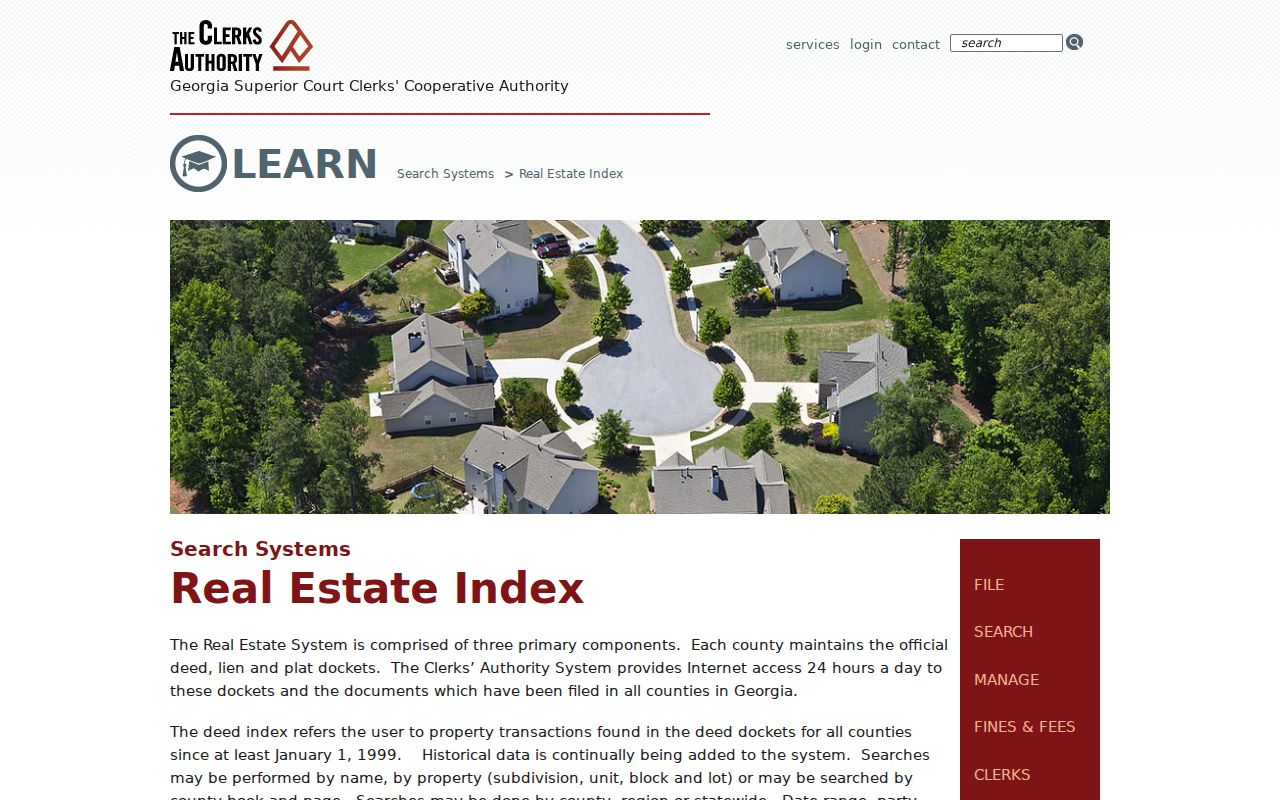
The statewide system is the web index; Seminole's clerk remains the custodian.
Build a Seminole Deed Chain
A chain of title records every transfer of one tract. Start at the newest reliable deed and work backward. Pair the prior owner's name with the same legal description. Names alone are weak keys. Where initials, estates, trusts, and companies appear, descriptions settle it.
- Find the present acquisition deed with the current owner as grantee.
- Copy the grantor, date, type, book/page, and full property description.
- Search that grantor as a grantee in an earlier range.
- Compare subdivision, lot, block, acreage, land lot, district, and plat cites.
- Repeat until the online baseline ends, then request the older indexes.
- Grantor
- The party conveying an interest.
- Grantee
- The party receiving the interest.
- Chain of title
- The ordered trail tied to the same land.
- Book/page
- The volume and page used to retrieve a recorded document.
- Instrument type
- The filing class, such as deed, lien, release, or plat.
Seminole Deeds Before 1999
GSCCCA indexes Georgia transactions from at least January 1, 1999. Material from 1993 through 1998 is still being added. That baseline does not promise every Seminole image or deed is online. A stalled chain may continue in local books. Seminole County has deeper roots. It was created from Early and Decatur County territory around 1920. It became official in 1921. Older chains may cross into parent-county records first. Keep the legal description fixed while the county name changes.
Note: Online coverage marks the index's reach, not the start of Seminole land ownership.
Cross-Key Seminole Deed Records
Book/page cites and property descriptions guard against a false name match. Local notices show reference-deed cites such as 334/228 and 377/395. They list parcel keys too. Land lot and district, acreage, subdivision, lot and block, and plat book/page all appear alongside. Copy those facts first. Named plats include Fairview Subdivision at Book 1 page 5, Crestview at Book 1 page 101, Riverview Subdivision No. II at Book 4 page 160, and Reynolds Village Subdivision No. 2 at Book 3 page 243. Those cites are strong request keys. They do not prove a city boundary.
Seminole Deed Images and Fees
GSCCCA separates index access from image and certified-search products. A regular account costs $14.95 per calendar month for unlimited image viewing. Printing runs $0.50 per page. A certified search costs $15 per debtor name. A certified-only account carries no monthly fee. Those figures are GSCCCA account terms, not Seminole County's local copy charge for certified deeds. For a certified deed, contact the clerk with the book/page and ask about cost, wording, delivery, and accepted payment.
Older Seminole Deed Records
Older deed work in Seminole County starts at the clerk's counter, by phone, or by written request for the grantor and grantee books. That is only the first stop. Next comes the Georgia Archives county microfilm collection. One caution applies. The Archives holds few post-1900 county records, apart from sets like tax digests and some marriages. Confirm the exact Seminole reels before counting on them.
FamilySearch carries broad Georgia wills, deeds, and probate collections. County coverage there still needs checking reel by reel. Local sources can fill gaps. The Seminole County Public Library genealogy department and the Donalsonville News archive often supply names and dates that point back to an instrument. Treat a notice as a lead, never a deed.
Seminole's creation date shapes the whole search. Land in Early or Decatur County before Seminole existed does not gain a new early deed just because a county line was drawn. Work backward through the Seminole volumes until the description and date point to a parent county. Then continue in that county's direct and reverse indexes. The recurring land lot, district, creek, road, acreage, and adjoining-owner language is more dependable than a later mailing label.
The Archives separates pre-1900 microfilm from modern files. Search the collection inventory first and confirm the county and reel before assuming a given Seminole volume is digitized. FamilySearch may require a free account or limit an image to a partner library, and the local clerk can settle the correct book title before a trip or archive request.
Monitor New Seminole Filings
The free GSCCCA Filing Activity Notification System alerts a registered name whenever a deed, lien, plat, or UCC filing hits the index. It launched in 2023. By October 7, 2024, GSCCCA reported 63,157 users, 133,448 requests, and 182,928 matches statewide.
An alert is not a title opinion. Open the instrument and compare the parcel description before acting. Common names can trigger notices that have nothing to do with your parcel. The official FANS signup shows the deed-filing alert route.
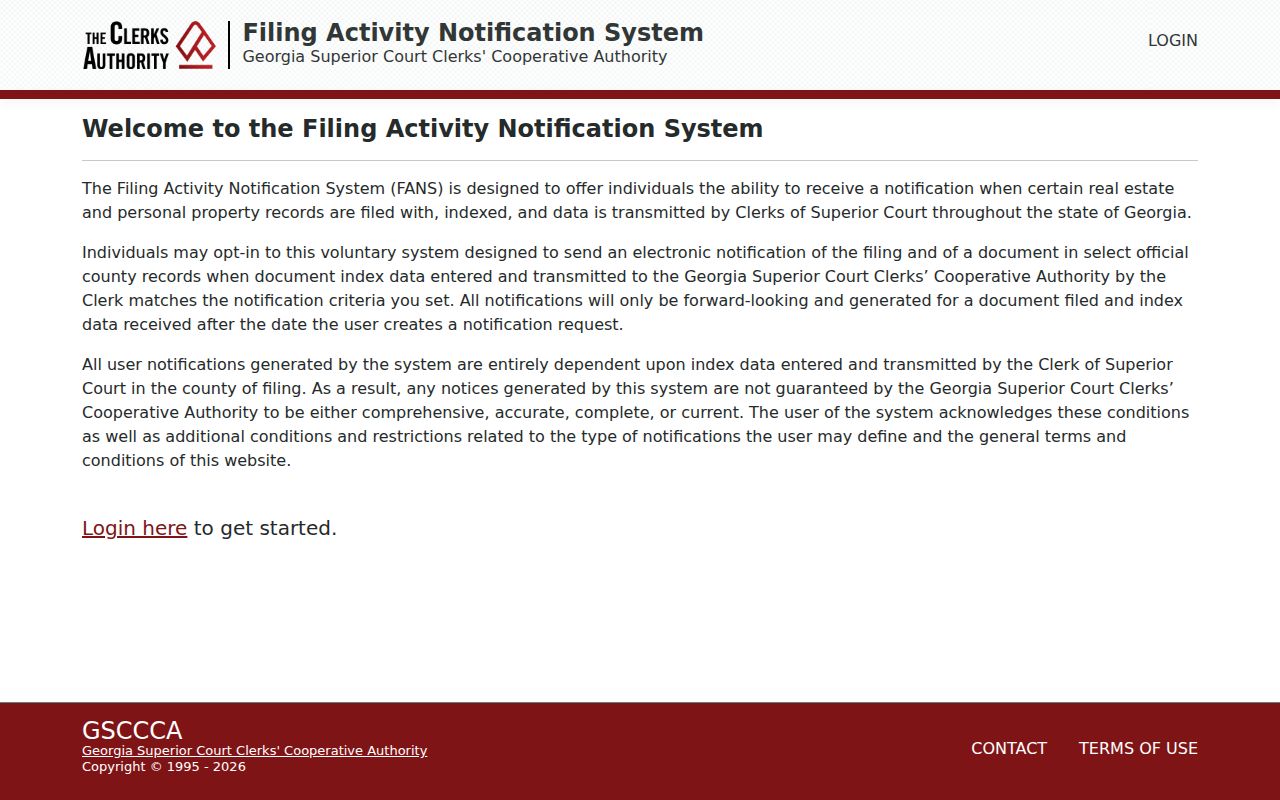
The tool watches index activity; it does not decide whether a filing is valid.
Request a Seminole Deed Copy
The online image is enough for many needs. A plain or certified county copy takes more. Give the Seminole clerk the grantor, grantee, date, instrument type, and book and page. Add the legal description whenever the names are common. Requests start in person, by phone, or in writing. A Georgia Open Records Act request can reach a non-indexed administrative record that already exists, though the office need not build a report for you. Ask for a cost estimate and your preferred format. For title decisions, rely on qualified legal or title help.
Format it so staff pull one instrument. List the parties exactly as indexed. Add the approximate recording date, the deed type, book and page, and the property description. State whether you want an emailed scan, a paper copy, or a certified copy. Mention it if the online result shows no image. If only a tax notice supplied the deed reference, say so and quote the exact cite.
Deed searches branch. An executor's authority may sit in a Probate Court estate file. A released debt may need the security deed and its cancellation. A subdivision lot may turn on the recorded plat cited in the deed. Keep each instrument in its own role, then assemble the shared book, page, and legal-description links across them.
Check the returned copy before closing the search. Confirm the recording stamp. Confirm every grantor and grantee, the execution date, the recording date, the stated consideration if shown, and all exhibits. Compare the ending description with the chain's start. A missing exhibit, an unreadable page, or a description that shifts to another lot is reason to ask the clerk for a clearer or complete copy. Marginal notes can point to another instrument. So can later cancellation references.
Recorded, not guaranteed. Seminole County deed records show filed instruments. They do not rule out an unrecorded interest or guarantee clear title.