
Seminole's Owner-of-Record Card
The Seminole Board of Tax Assessors keeps the present assessment roll. Its qPublic entry does not open for public viewing. The exact labels on the local parcel card remain unconfirmed. Treat any owner-of-record card as a set of separate facts. Read together they still do not prove title on their own.
| Owner Name | The roll's current owner label, with exact local wording still unverified |
|---|---|
| Mailing Address | Where assessment or tax mail is directed, if published |
| Situs Address | The parcel's physical location, if assigned |
| Last Sale Date | A transfer clue that needs confirmation on the deed |
| Deed Reference | Book/page or instrument link to the recorded source, if shown |
Owner of record means the party listed on the current administrative roll. It does not mean occupant. That owner may get mail at another address, hold title through an entity, or have transferred the land too recently for the tax system to catch up. The roll answers who the county bills, not who lives there.
Seminole's Assessor Fields Need Verification
The Seminole County qPublic page appears in the Georgia Department of Revenue property-records directory. The live assessor portal denies public access, though. No official source publishes its exact owner label. Its mailing and situs fields, last-sale field, update date, and map controls also lack any published detail. Those gaps stand. Anyone comparing the roll against a deed should know which fields simply lack confirmation.
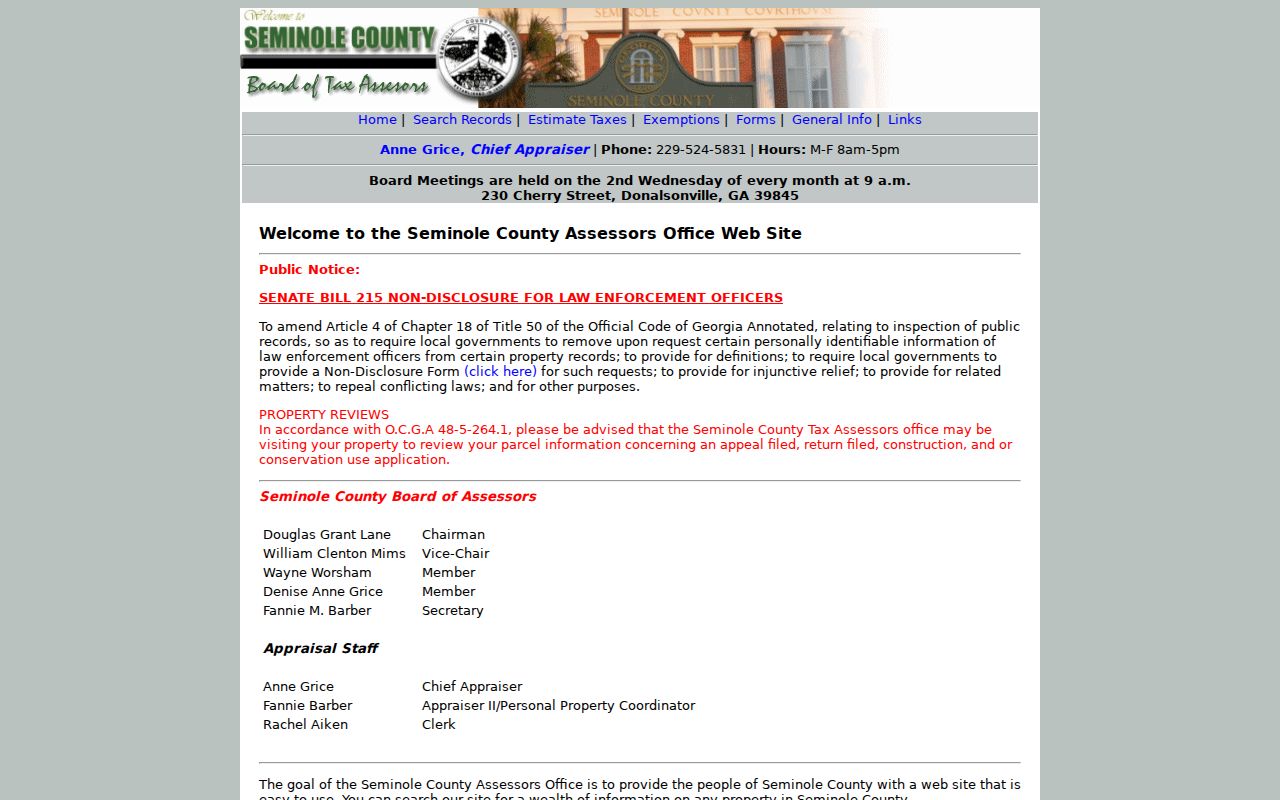
When the card will not load, search the Tax Commissioner account instead. Then call the Tax Assessor. Request the current parcel card by parcel key or property address. Staff can read the card directly.
Note: A failed qPublic session is an access problem, not evidence that Seminole County lacks an assessment roll.
How Current Is Seminole's Owner?
Seminole County publishes no fixed assessor refresh cycle and no average closing-to-roll delay. So do not promise a set number of days. Compare dates instead. A tax account belongs to a tax year. A deed carries an execution date and a recording date. The newest relevant recording can show a grantee well before the roll catches up.
Lag matters most after a recent sale. Corrective deeds, probate transfers, mergers, and changes in trust ownership have the same effect. It cuts the other way too, when an index result gets misread. The latest recorded instrument must affect the same legal description. It must also convey the ownership interest at issue. A security deed, lien, release, or plat filing is not a change of the current owner by itself.
Check a recent sale. The Seminole assessment roll can lag a closing. The newest deed grantee is the stronger current clue when the parcel and legal description match.
Verify Seminole's Current Owner
Verifying the present owner is a two-record comparison. You need not walk the full historic chain. You do need enough detail to prove the roll and the deed concern the same tract in Seminole County.
- Search the Seminole Tax Commissioner account portal by the best available address, owner, bill, or parcel clue. Note the tax year.
- Obtain the current assessor parcel card online or from the Tax Assessor. Copy the owner label, parcel key, mailing and situs labels, and any deed or sale reference exactly.
- Use the GSCCCA Real Estate Index to locate the most recent deed that matches the parcel or legal description. Compare grantee and recording date.
- Ask the Seminole County Superior Court Clerk for the recorded image or a certified copy when the index alone is unclear. Check later corrective instruments before settling on the current owner.
For the broader address-to-owner approach, see the Seminole County owner-finding workflow. The aim here is narrower: settle which present name the official property records support.
Seminole Current-Owner Terms
Several labels sound alike but carry different weight.
- Owner of record
- The party presently carried as owner in an official administrative record.
- Assessment roll
- The assessor's property list used to value and classify parcels for taxation.
- Situs address
- The land's physical location, which may differ from the owner mailing address.
- Grantee
- The party receiving the interest described in a deed.
- Recording lag
- The period before one public system reflects a change already filed in another.
A recorded index entry is not the full instrument. Open the deed itself to check the capacity, legal description, reservations, exceptions, and form of conveyance before drawing conclusions.
Seminole Tax Notices Name Roles
A published Seminole County FiFa notice uses distinct columns. One covers the defendant in FiFa. The other is the "Current Property Owner." It also lists a file number, map or parcel number, reference deed, and property description. A known address and years due appear too. That layout shows why identity labels should be copied, never collapsed into one field.
Remember what the notice is not. It is a tax and legal notice from a particular time. It is not an assessor parcel card. The defendant may differ from the listed current property owner. Neither column replaces the latest-deed check. Even so, the parcel and reference-deed columns work well as cross-keys when qPublic is unavailable.
Seminole Entity Owners Today
The current owner may be an LLC, corporation, trust, estate, or life-estate holder. Keep the name and capacity exactly as written. For a Georgia company, the Secretary of State Business Search confirms entity status, registered agent, and filing details. A registered agent is a service contact. It does not prove the agent owns the parcel personally.
Trust and estate wording deserves equal care. The grantee may be a trustee in a fiduciary role, an executor acting for an estate, or a life tenant whose interest differs from the remainder interest. The Seminole County Probate Court may hold an estate file that explains the present deed. Never substitute a beneficiary or heir for the record owner without a filed instrument supporting the change.
Monitor New Seminole Filings
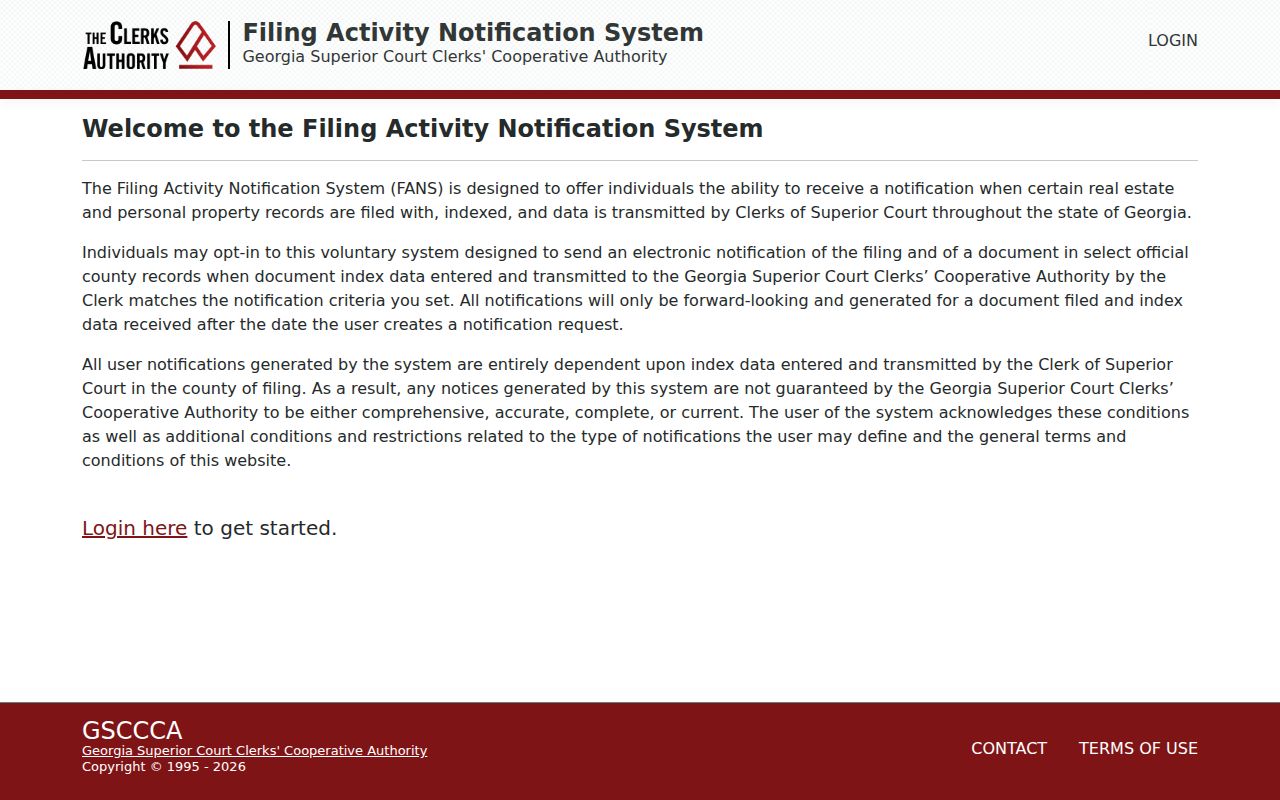
The free GSCCCA Filing Activity Notification System, known as FANS, can send notice when a matching deed, lien, plat, or UCC filing enters the system. It is useful after confirming the present owner or when watching for an unfamiliar filing. As of October 2024, GSCCCA reported 63,157 FANS users, a statewide number rather than a Seminole-only count.
FANS is a monitoring aid, not a title opinion. Open the alerted instrument, compare the parcel and legal description, and contact the Superior Court Clerk if the filing is unfamiliar. Name-based alerts may also produce matches for another person or entity with a similar name.
The captured FANS enrollment page shows the free alert service.
Confirm the owner of record first. Then let alerts do their work, and judge each new Seminole County filing on its own facts.
Use Seminole Owner Data Carefully
A public mailing address is the right contact clue for a property matter, where the law allows it to show. It is not proof that anyone lives there. Georgia Safe at Home and VoteSafe shield qualifying addresses, and other redactions may apply. Never try to rebuild a protected address from unrelated records.
When the online tools fall short, go to the office. Reach the Tax Assessor by phone, mail, or in person. Reach the Tax Commissioner or Superior Court Clerk the same ways. A narrow Georgia Open Records Act request can ask for one specific non-indexed record. State the parcel number, address, record type, and date range. Let the custodian apply any required redactions.
Ask for the right record at each window. The Tax Assessor can print the current parcel card with its effective or update date. The Tax Commissioner can pull the account tied to a stated tax year. The Superior Court Clerk can provide the newest deed image and any later corrective instrument. A certified copy is available when the record must travel. The clerk's office sits at 200 S Knox Avenue in Donalsonville. Mail is accepted at P.O. Box 672. Keep a simple log of dates, offices, record labels, and answers. That log earns its keep when two systems show different owner names.
Older deed books and probate files matter only when they explain a present vesting problem. Do not let them turn a current-owner check into a full ownership history. If the newest deed points to an estate, the Seminole Probate Court can clarify the fiduciary role. If it cites an older plat, the Clerk can supply that map. The question stays present tense: which party does the latest reliable record name today?
Owner is not occupant. Use Seminole County owner-of-record information for lawful property research only. Do not use it to harass, intimidate, or expose anyone.