
Start a Seminole Property Search
Start broad, then narrow to a key that does not change. An address is easy to type. A parcel number and legal description travel better between tax and deed systems. They identify the land itself rather than a mailing label. The Seminole County tax-account search accepts several starting keys on one screen. The assessor's qPublic link is the intended valuation route. GSCCCA holds the filed deeds, liens, and plats.
Write down each result instead of replacing one clue with the next. A tax year, an owner spelling, a parcel key, and a book/page cite together separate similar names. They also keep rural tracts that would otherwise blur apart.
- Search the known street address in AssuranceGov's Address mode and select the right tax year.
- Save the parcel or bill number and copy the owner or company name exactly as displayed.
- Check the official assessor link for the valuation roll when qPublic is reachable.
- Carry the name, parcel facts, subdivision, or book/page to GSCCCA and confirm the latest recorded transfer.
- Request a copy from the Superior Court Clerk when the image, older book, or exact filing is not online.
Seminole Tax Search Controls
AssuranceGov is the most detailed local search screen. It keeps a person's name separate from a company name and allows a direct query by bill, parcel, or address. The tax-year control matters because every result belongs to one roll year. A blank screen only means the query failed, not that the parcel does not exist.
| Visible Control | Input | How to Use It |
|---|---|---|
| Tax Year | Year selector or input | Fix the roll year before comparing a bill. |
| Search By | Name, Bill #, Company, Parcel, Address | Choose the key that matches the known fact. |
| Last Name Match | Starts With or Contains | Broaden a name search without changing the spelling at once. |
| Owner name | Last and first name boxes | Start with the last name; add the first name to narrow. |
| Results | Property Search Results and Print Results | Review on screen or print the returned list. |
The portal publishes no CSV export and no archive-depth list. It also displays a tax-account result rather than a full assessor parcel card, so treat it accordingly. Visit the screen through the Seminole County AssuranceGov search.
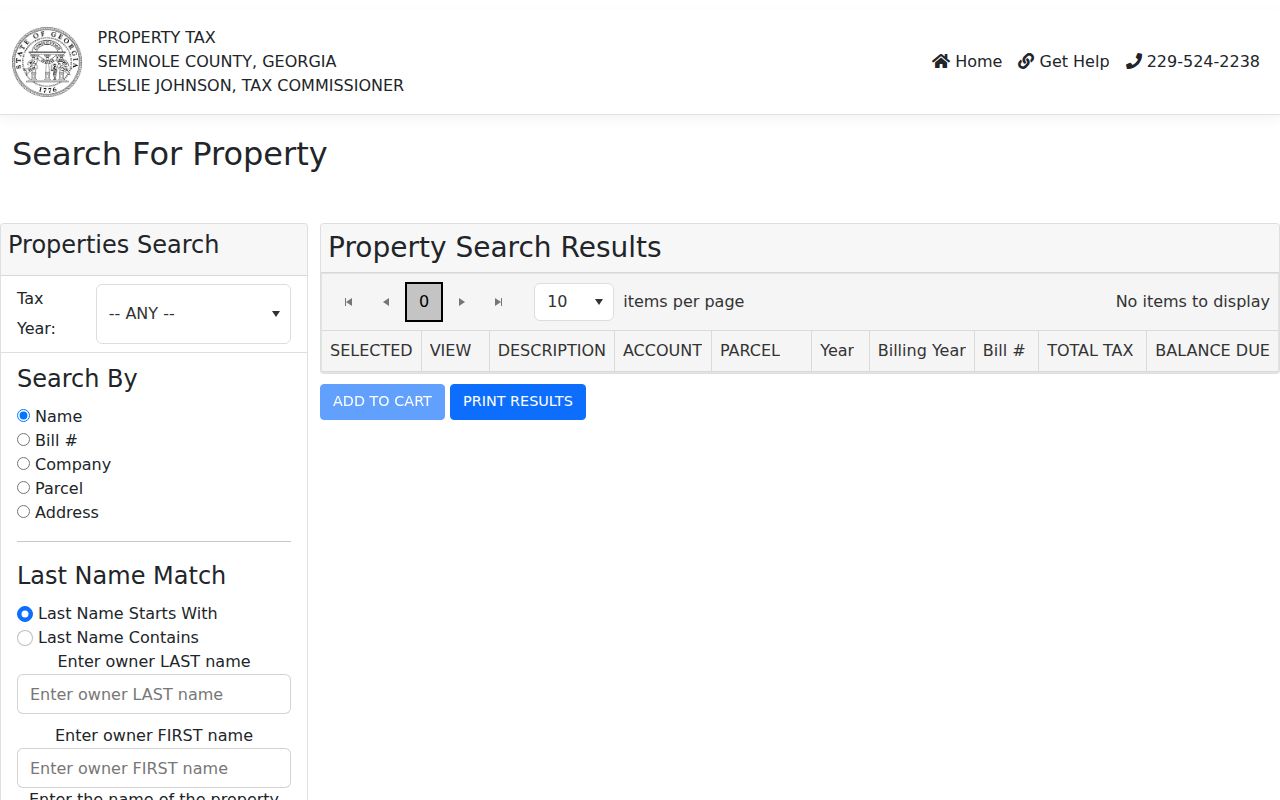
Its visible choices support the address, name, company, bill, and parcel routes described here.
Compare Seminole Search Keys
The best search key depends on what you already hold. An address is fastest for a current tax account. A name can surface more than one holding, though it also gathers unrelated people. A parcel number is exact. But local examples include spaces and letter prefixes that must be copied carefully.
| Search Key | Best Local Route | Main Risk |
|---|---|---|
| Street address | AssuranceGov Address mode | Situs, mailing, old route, and postal-city labels may differ. |
| Owner name | AssuranceGov Name, qPublic when reachable, then GSCCCA | Initials, married names, estates, trusts, and common names can split results. |
| Company | AssuranceGov Company, then Georgia business search | An LLC suffix or formal entity name may be required. |
| Parcel or bill | AssuranceGov Parcel or Bill # | The county has not published a prefix guide or format rule. |
Not a title search. A Seminole County property search locates public entries. It does not guarantee clear title or resolve an unrecorded claim.
What Seminole Property Results Show
The local screen shows a result area and a print control. It does not display a complete qPublic parcel card. A published tax and legal notice offers the strongest field-level sample of Seminole tax data. Read that notice as a notice tied to parcels. It is not an assessor card or a market-value statement.
| Map or Parcel Number | Compact local identifiers, including lettered and spaced examples. |
|---|---|
| Identity Roles | The defendant in FiFa and current property owner appear as separate roles. |
| Reference Deed | A book/page citation that can be carried to the deed index. |
| Property Description | Land lot, district, acreage, subdivision, lot, block, or plat cite. |
| Known Address | A street or highway address used to identify the tract. |
| Years Due | The delinquent tax years covered by that notice. |
Fair-market value, assessed value, exemptions, a sketch, mailing address, and value history are absent from that sample. Those facts come only from a reachable assessor card or a direct request to the office.
When Seminole qPublic Fails
The Seminole Board of Tax Assessors qPublic page is linked by Georgia's official property-record directory. Yet it can return an access-denied error. Do not borrow field names from another county. Retry the official link, or use AssuranceGov for the tax account. You can also call the Board of Tax Assessors for a parcel card or a pending roll question.
For an older or owner-focused question, take the parcel and legal description to the Superior Court Clerk. The counter, phone, mail, and a narrow Georgia Open Records Act request all remain valid routes. The clerk can also identify an older deed book. The web index does not expose it on its own.
You can check the page yourself through the official Seminole qPublic link.
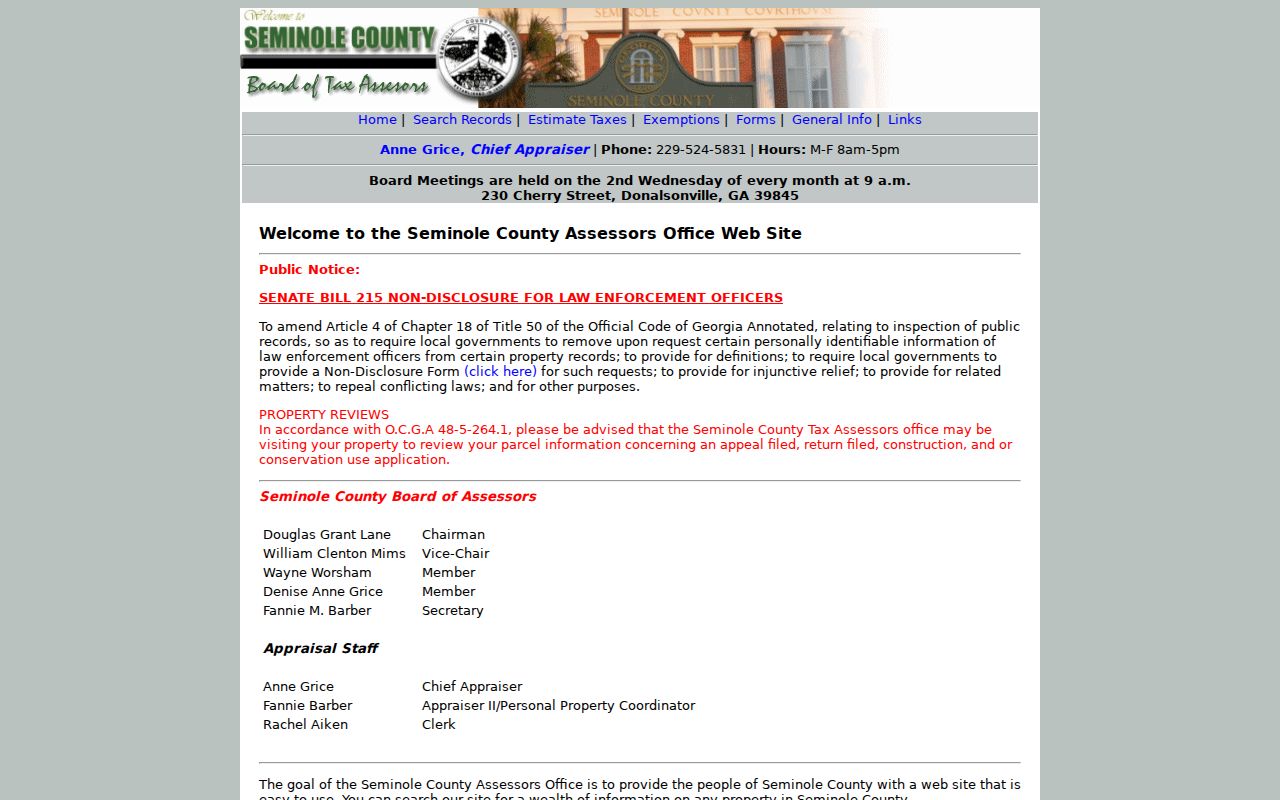
The assessor route exists even when the page blocks visitors. Its fields stay out of reach until the error clears. Note: A portal error changes the access route, not the existence or legal status of the county record.
Search Seminole Owner Variants
An owner search should follow the way the party appears in each record. Try initials, a full first name, former surnames, and reasonable spelling variants. Search an estate under the decedent. Also search the estate itself, the executor, the administrator, and later grantees. A trust may hide under a trustee's name or the trust's formal title.
For a company, use the exact legal name and suffix. The Georgia business-entity search can resolve an entity name or control number. It can do this before the same name is tried in the deed index. It does not establish land ownership. The deed and legal description supply that link.
- Parcel or APN
- The county's account key for a tract; Seminole has not published a format guide.
- Situs address
- The location assigned to the property, which can differ from the owner's mail address.
- Owner of record
- The person or entity shown on a given official roll or recorded instrument.
- Legal description
- The land description in a deed or plat, not merely the street line.
Confirm Seminole Property in GSCCCA
A tax search may yield a likely owner. Next, test the recorded trail in the GSCCCA Real Estate Index. Search the owner as both grantee and grantor. Restrict the county to Seminole. Compare dates, party roles, property location, and book/page cites. The system offers name, book/page, property, instrument-type, PT-61, lien, plat, and UCC routes. Some tools and images carry account terms, though.
The statewide deed baseline reaches at least January 1, 1999. Material from 1993 through 1998 is being added. That reach does not promise every local image or older book is online. GSCCCA confirms what was indexed and recorded; the clerk remains the custodian. View the index through the official GSCCCA real-estate search.
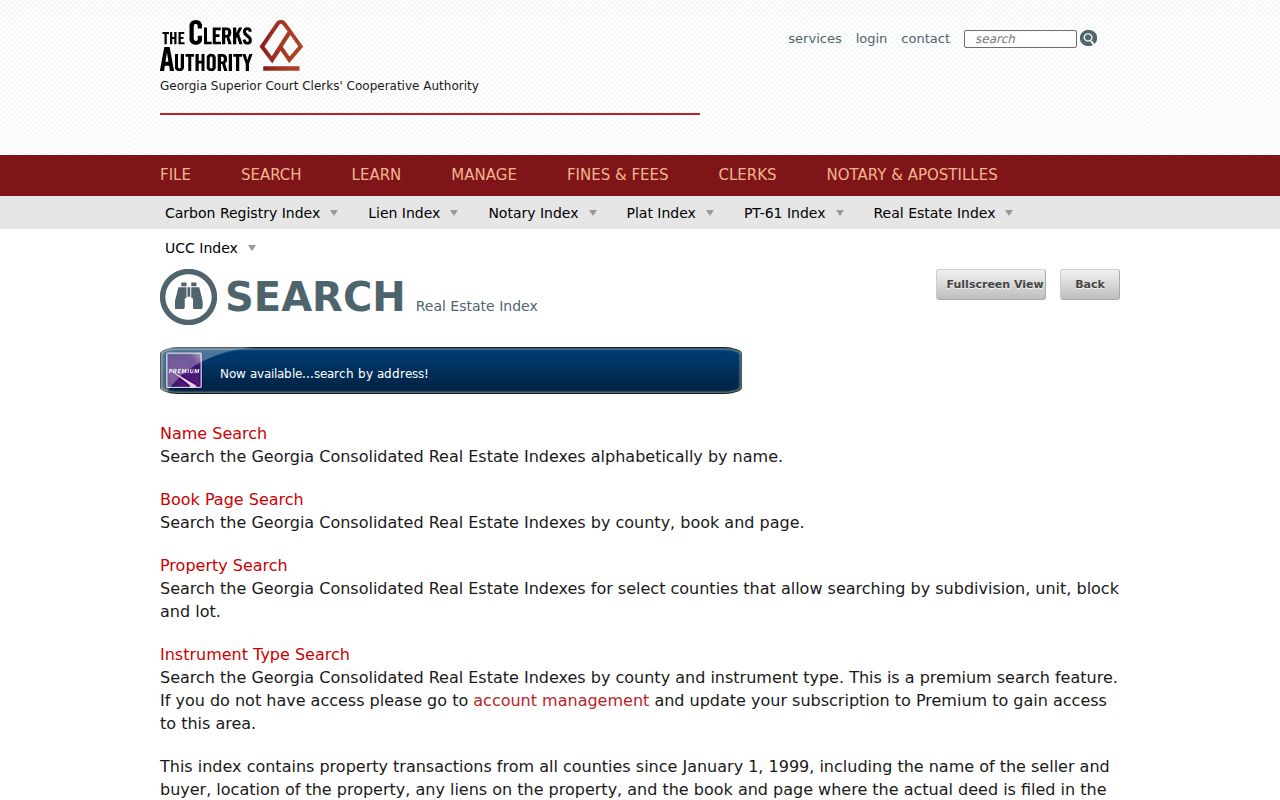
The screen shows why deed confirmation is a separate step from a tax-account query.
Seminole Address Clues Need Care
A mailing city is not a boundary. It only shows how the mail routes. A Donalsonville or Iron City postal line can sit on a parcel. That parcel may sit in unincorporated Seminole County. Rural land often lacks a street number altogether. Instead, the deed may describe the land by lot, district, acreage, or metes and bounds.
One local trap is concrete. USPS moved 679 Iron City deliveries from ZIP 31759 to 39859 in 2002. Older deeds and notices may still carry the old ZIP. Search both versions, then join the records with the parcel number and legal description. For current mail formatting, trust USPS rather than the tax portal as the postal authority.
Use Seminole Plat References
An address search sometimes stalls. A recorded plat offers a sturdier key. Local notices cite four Seminole County subdivisions this way. Fairview Subdivision sits at Plat Book 1, page 5. Crestview appears at Plat Book 1, page 101. Riverview Subdivision No. II is at Plat Book 4, page 160, and Reynolds Village Subdivision No. 2 at Plat Book 3, page 243. Copy the full subdivision name, lot, block, and plat book and page into a clerk request.
GSCCCA supports Plat Name and Book Page searches for recorded plats. A plat reference can tie an abbreviated address to the deed trail, though it will not settle a legal boundary or a city line. Boundary interpretation belongs with a recorded survey and qualified advice.
Finish a Seminole Records Search
Not every Seminole County property record is online. The Superior Court Clerk takes deed and plat questions at 200 S Knox Avenue in Donalsonville, by phone at 229-524-2525, or through a written request. The Tax Commissioner works from the same courthouse address. That office handles tax-account access at 229-524-2238. Both offices publish weekday hours for visitors. Certified-copy charges are not posted, so ask each office directly before ordering. Older land records take a different route. Ask the clerk for the grantor and grantee books, then check Georgia Archives microfilm, FamilySearch, and the Seminole County Public Library genealogy department.
Narrow requests work better than broad ones. State the owner of record, the address or parcel number, the date span, and the record type. Say whether you want inspection, a plain copy, or a certified copy. The Georgia Open Records Act frames any request for a record no search screen offers. Name the custodian. Describe the document itself rather than asking staff to research the parcel. Georgia guidance gives agencies three business days to provide access or explain a delay, timetable, cost, or basis for withholding. The first 15 minutes of search and retrieval are free, though later staff time and copies may be charged. No office must create a new report, which is why one parcel card, deed-book page, tax statement, or plat beats a demand for everything about an address.
Keep a search log as you go. Record the exact query, portal, tax year, result date, party spelling, parcel key, and book and page. Note failed searches too. They often point to a better mode. If AssuranceGov returns nothing for an address, try the parcel or owner mode before changing the street spelling. If GSCCCA returns several party matches, compare county, dates, party role, and the legal description. When staff hand you a book or image, keep the office name and copy status. A screen print, a plain copy, and a certified copy serve different needs. Nothing counts as certified unless the custodian says so.
Seminole County's small office network rewards direct contact. One courthouse address houses the Clerk, the Tax Commissioner, and Probate Court. Each controls different records. Probate can explain an executor in a transfer. Planning may hold a permit or a final plat form, and the library may hold a newspaper notice that fills a missing date. Carry a fixed parcel description with you. No single office keeps one combined property file. Move between them with the parcel number and legal description in hand.